i’ve been offered a free piano!

Should I take it? The owners said it just needs tuning. This will be great for my kids to learn on.
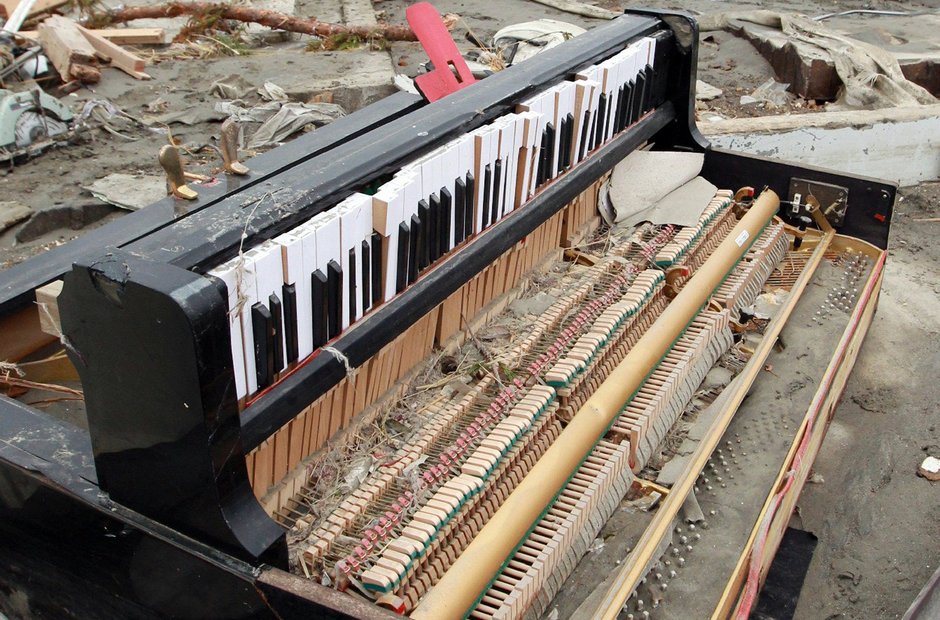
Please slow down. Before accepting an older, well-used piano, be aware – the typical “free” piano will likely cost you at least around $500, and probably more.

Moving… Here in Southern California and in most metropolitan areas, piano moving starts at around $200, and can easily be higher. I would never under any circumstances recommend trying to move a grand piano yourself, and in most cases I wouldn’t recommend moving an upright either. It’s just too risky to the piano, and to the people attempting the move. So now the free piano is, let’s say, $250 to get it safely to your house.

Condition… We don’t know anything about the condition of the piano yet, all we know is the person giving it away said it “just needs tuning.” Unless that person knows something about working on pianos, you’re going to need more information. But let’s say he or she is right- this piano just needs tuning. Chances are good that if the piano is being given away, it hasn’t been played in a long time, so chances are also good it hasn’t been tuned in a while. That means a normal tuning won’t hold, and it’ll need a pitch raise first. A pitch raise plus tuning will run $200-$250. So now, assuming everything the piano owner said is true, you’re in it for $400-$500.

But wait, there’s more.

If the piano hasn’t been used in years, some of the action parts may be sluggish. In other words, sometimes the keys might not work as well as they should. Best case, maybe a little lubrication; worst and more likely case – re-pinning a bunch of little parts. Sometimes you’ll still hear a tone when you’ve let go of a key; best case, damper adjustment; worst case, new dampers.

Here in Southern California near the ocean, older piano strings tend to get rusty, which can cause strings to break under the stress of tuning. That loud pop of a broken piano is never a happy sound.

So $500 or so to get the used piano home and tune it, and realistically another few hundred to deal with the miscellaneous issues I mentioned. This free piano is now approaching $800-$1000, just for normal likely problems. WHAT SHOULD YOU DO ABOUT THIS FREE PIANO??

  1. Get a qualified piano technician to inspect the piano before you agree to take it (not after you already have it in your house). You’ll likely have to pay a fee for that service, but it’ll potentially save you hundreds of dollars by avoiding taking a money pit piano into your home. Some tuners, like me, might even credit that inspection amount toward whatever service the piano needs if you do end up taking it.
  2. Be careful to not become too attached to the piano until you know exactly what you’re getting into. This especially applies to getting a piano from a family member or close friend, or a cool piano that will look great in your house. Slow down and find out what your costs might be. It’s possible you might want the piano regardless of how expensive it will be to make it playable, for purely personal reasons. That’s completely fine – as long as you’re aware of the costs going into it.

Pianos are cool things to have in your house, especially if they work well. If you’re offered a free one, it might be a good thing for you, or it might not. If I can be of any help in the Southern California area, call me at 310-739-3740.


Can I tune my own piano?

With videos on every topic available from YouTube, and piano tuning tools available on Amazon, is it OK to save money and just tune your own piano? What can go wrong? How hard can it be?

The answer is – while it’s theoretically possible, it’s very difficult for an untrained person to successfully tune a piano. I would strongly advise against it. You will save hours of frustration and possibly hundreds of dollars by simply booking an appointment with a qualified, experienced piano technician who can tune it right, without having to correct or repair what might have occurred during your tuning attempt.

Your piano contains approximately 240-250 strings which must be adjusted during the process of tuning, which often means adjusting a string (actually, a “tuning pin”), and then coming back to it a hour later and readjusting it. Tuning pins are like cats – they don’t like to stay where you put them. No offense to cat owners. Note regarding all those 240-ish tuning pins… The visual layout of the tuning pins can be confusing. It’s VERY easy (even for an experienced tuner) to turn the wrong one, wonder why you aren’t hearing the pitch change, and suddenly hear the disheartening explosive sound of a string breaking because you’ve been adjusting the wrong pin (ask me how I know).

Your piano also contains approximately 10,000 moving parts. Sometimes mechanical problems need to be corrected before your piano can actually be tuned, which means you’ll need to be prepared to decide which of those 10,000 parts need to be adjusted or replaced. Or, sometimes the piano is mechanically fine, but while attempting to simply tune it, some of those pesky 10,000 parts have a tendency to move or accidentally get damaged. So what you thought was a simple tuning can easily become a problem involving diagnosing and repair, and more money than simply calling a qualified tuner in the first place.

Sometimes a piano has fallen so far below it’s preferred A-440 pitch that an additional process known as “pitch raising” or “pitch correcting” is necessary. Simply turning the tuning pins and bringing the strings up to the desired concert pitch (while hoping and praying none of the strings break from being forced into a higher tension) will not work; you will spend many hours trying to get the piano to the desired pitch, only to find it has gone out of tune hours later, sounding worse than when you started.

Finally, regarding the so-called “piano tuning tools” available from Amazon – professional piano tuning tools are made to a high standard of quality and as such, tend to be more expensive than the Amazon specials. A$39 tuning lever (or tuning hammer) from Amazon simply cannot perform to the level of a professional tuning lever costing 10 times as much. Attempting to tune a piano with inferior tools is much like attempting any professional job with unprofessional tools – at best you risk breaking the tools; at worst, you risk injuring yourself or damaging your piano.

Finally, some pianos simply cannot be tuned; or if they can be tuned, it’s not economically advisable to put any more work into them. A qualified piano technician can advise you on the overall health and longevity prospects of your piano, and give input on whether it’s time to replace it.

I hope the above article was helpful! If I can answer any questions about your piano, or if you’d like to schedule a tuning/service appointment, please contact me at 310-739-3740. Thanks!